If you have been watching Bremerton, you have probably noticed the cranes, new apartment communities, and growing attention around Downtown. It can feel like the market is changing fast, especially if you are trying to decide when to buy, when to sell, or which part of the city best fits your goals. The good news is that Bremerton’s growth is not random, and understanding where development is happening can help you make a smarter move. Let’s dive in.
Bremerton Growth Is Planned
New development in Bremerton is being shaped by a citywide plan, not just by a few isolated projects. The city’s 2024 comprehensive plan directs much of its future growth toward Downtown and a select group of district and neighborhood centers.
That strategy became more concrete when the updated zoning code took effect on June 16, 2025. The city has also stated that most mixed-use, commercial, and multifamily development is planned for Downtown and several designated centers, which gives buyers and sellers a clearer picture of where change is most likely to happen.
Bremerton’s Market Is Still Competitive
Even with new housing coming online, Bremerton remains a competitive market. In May 2026, Redfin reported a median sold price of $460,037 and about 13 days on market, while Zillow showed an average home value of $487,263 with homes pending in about 7 days.
Realtor.com also described Bremerton as a seller’s market in March 2026, with 377 active listings. While each source uses different methods, the broader takeaway is consistent: demand is still absorbing supply, and the market has not loosened in a major way.
Older Housing Still Shapes the Market
One of the most important things to understand about Bremerton is that most of its housing is still older. According to the city’s 2026-2030 Consolidated Plan, 77.3% of housing units were built before 1980, and 22% were built in 1939 or earlier.
That matters because new construction may get a lot of attention, but it is entering a market where established homes still make up the vast majority of inventory. For buyers, that often means comparing newer amenities against older homes that may offer different lot sizes, layouts, or renovation potential.
For sellers, it means your home may not be competing directly with every new project. In many cases, a well-prepared resale property appeals to a different buyer than a newer apartment or condo-style living option.
New Development Is Not Brand New
Bremerton’s current growth story has been building for years. The city’s housing appendix shows that Bremerton permitted 1,729 new housing units between 2013 and 2019, and 54% of those permits were for multifamily buildings.
That history is useful because it shows today’s development pattern is part of a longer shift. Bremerton has been gradually adding more multifamily and infill housing, and the latest round of policy updates appears designed to continue that direction.
Downtown Bremerton Leads the Way
Downtown is clearly the city’s main growth engine. The city describes the Downtown Bremerton Metropolitan Regional Growth Center as a mixed-use urban destination with dense housing, jobs, entertainment, transit choices, and active transportation options.
This helps explain why some of Bremerton’s most visible new projects are concentrated there. Downtown is where the city is intentionally encouraging a higher intensity mix of housing and services, and it is also where multifamily tax exemption incentives are available for qualifying development.
Marina Square Signals the Downtown Vision
Marina Square is one of the clearest examples of what this growth looks like in practice. Located at 280 Washington Avenue, the project emphasizes downtown waterfront living with direct access to the boardwalk and ferry terminal, along with amenity-driven features like a rooftop deck, kayak launch, and on-site market.
Projects like this reflect a specific type of housing choice. They are designed around convenience, access, and lifestyle features rather than yard space or traditional detached-home layouts.
Harborside Flats Adds More Infill Supply
Harborside Flats at 240 Burwell Street is another example of downtown infill. The project is now leasing, includes MFTE units, and sits one block from the Bremerton Ferry Terminal in Quincy Square.
Its features include private balconies, rooftop amenities, bike storage, and limited off-street parking. Together with Marina Square, it shows how new supply downtown is often tailored to residents who value proximity to ferries, walkability, and newer building amenities.
Growth Extends Beyond the Waterfront
While Downtown gets much of the attention, newer housing is not limited to the core. Camber Apartments, located north of Bremerton, is a completed 324-unit garden-style community with 14 apartment buildings, landscaped common spaces, a clubhouse, a fieldhouse, and a pool.
There is also Evergreen Pointe on Sheldon Boulevard, a planned 123-unit multifamily project. According to the developer and the SEPA record, construction is expected to start in Q4 2025, with a 98,000-square-foot building and 123 parking spaces.
These projects show that Bremerton’s housing expansion is happening in more than one form. Some projects are urban and amenity-rich, while others follow a more garden-style multifamily model.
Smaller Infill Matters Too
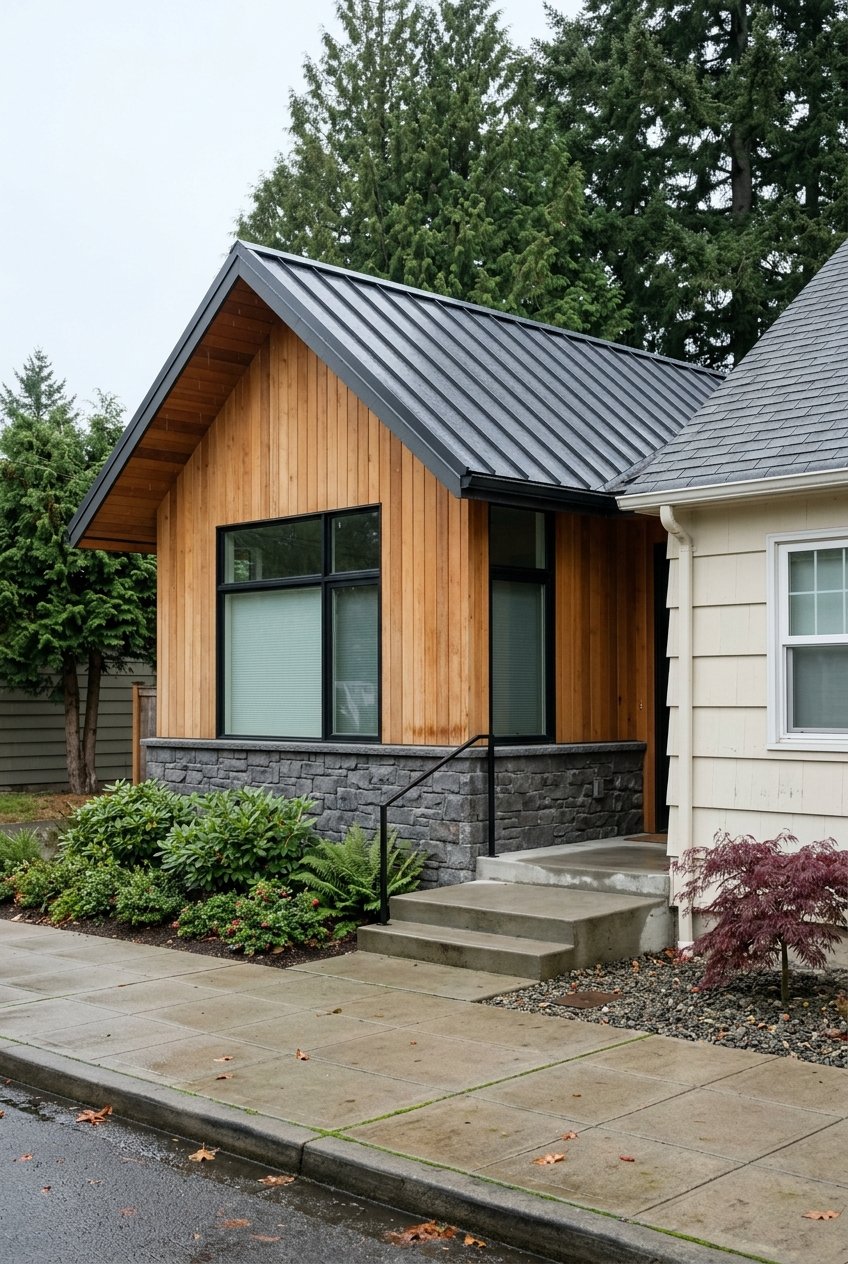
Not all new housing arrives as large apartment communities. Bremerton is also encouraging smaller-scale infill, including accessory dwelling units, or ADUs.
Under the city’s ADU rules, ADUs are allowed wherever a single-family home is allowed, up to two ADUs can be permitted per lot, and parking requirements were removed as of June 16, 2025. The city also asks that ADU design blend with the existing house and neighborhood, which means some new housing may appear more quietly in the form of backyard cottages or converted garage units.
This kind of change can matter over time because it adds housing without always changing the look of a street as dramatically as a large multifamily project. For owners, it may also create new ways to think about property use and long-term flexibility.
Detached Home Construction Is Still Happening
Even with a lot of focus on multifamily growth, detached-home development has not disappeared. The city issued January 2026 permits for multiple new single-family homes in Sinclair Ridge Phase 3 on Flat Top Drive.
That is a helpful reminder for buyers who want a more traditional home style. Bremerton’s growth is not only about apartments. It also includes builder-led subdivisions and smaller pockets of single-family expansion.
City Policy Is Steering Growth Toward Centers
Bremerton is not spreading density evenly across every neighborhood. The city’s centers-based strategy directs population and employment growth into Downtown, Harrison Heights, Wheaton/Riddell, Wheaton/Sheridan, Charleston, Manette, and PSIC-Bremerton.
The city says subarea plans provide the more detailed land-use designations and development standards for those locations. In practical terms, that means some areas are likely to see more visible change than others over the coming years.
MFTE Incentives Reinforce That Pattern
The city’s MFTE program supports that same centers-based growth strategy. According to the city, the program is intended to stimulate new construction or rehabilitation of vacant or underused buildings, direct growth to targeted areas, and reduce development pressure on single-family neighborhoods.
Target areas include Downtown, Bay Vista, Charleston, Wheaton-Sheridan, Harrison Heights, Wheaton-Riddell, and Manette. For buyers and sellers, that is a useful clue about where additional redevelopment activity may continue.
Capacity Numbers Show Where Growth Can Land
Bremerton’s housing appendix says the city must accommodate 9,556 permanent housing units by 2044. The updated plan shows capacity for 10,067 units, which is a surplus of 511 units.
Downtown alone accounts for 4,322 units of capacity, while Harrison Heights carries 1,695. Those numbers help explain why certain centers are likely to absorb a larger share of future development and why growth may feel especially visible in those locations.
What This Means for Buyers
If you are buying in Bremerton, new development gives you more choices, but not in every segment of the market. Much of the newest product is clustered in Downtown or in multifamily communities, while established neighborhoods still provide most of the for-sale home inventory.
Realtor.com neighborhood data from March 2026 illustrates that difference. Downtown Bremerton had only 1 home for sale and 7 rentals, while West Bremerton had 120 homes for sale, East Bremerton had 54, and Manette had 12.
That split can shape your search. If you want newer amenities, proximity to ferries, and lower-maintenance living, newer multifamily options may stand out. If you want a detached home, yard space, or an established residential setting, you may find more options outside the downtown core.
What This Means for Sellers
If you are selling, new development does not automatically make older homes less appealing. In fact, Bremerton’s older housing stock means many buyers are still actively comparing established homes based on condition, updates, lot character, and location.
That said, pricing strategy matters. The city’s housing plan notes that land availability, regulations, and construction costs mean rents and prices must be high enough to make new projects feasible, which helps explain why newer product often sits above older-stock price points.
For resale sellers, that creates an important distinction. Your home may not need to compete on rooftop decks, on-site markets, or large common-area amenities if your value is tied to lot size, layout, privacy, views, or thoughtful updates. The key is positioning your property clearly within its true market segment.
Neighborhood Feel May Change Unevenly
One reason development can feel confusing is that it is not affecting every part of Bremerton the same way. Center areas may experience faster changes in building type, parking demand, and day-to-day activity because that is where the city is concentrating growth.
Established single-family areas may see slower, more gradual change, especially where new housing is more likely to appear through smaller infill such as ADUs. That creates a market where hyperlocal knowledge matters more than broad citywide averages.
Long-Term Value Will Likely Follow Access and Services
The city’s planning direction offers clues about what may continue to support long-term value. Ferry access, downtown walkability, and the concentration of services and amenities in designated centers are all central to the city’s growth strategy.
That does not mean every property will perform the same way. It does mean that location within Bremerton, property type, and proximity to key access points may play an increasingly important role in how buyers compare value over time.
Why Local Guidance Matters More Than Ever
In a market like Bremerton, it is easy to oversimplify the story. New apartments downtown do not tell you everything about resale demand in Manette, pricing in West Bremerton, or buyer behavior around older homes with updates and character.
That is why local analysis matters. Whether you are buying, selling, or looking at a small development opportunity, you need to understand not just that Bremerton is growing, but where it is growing, how that growth is being shaped, and what it means for your specific property goals.
If you want a clear, discreet conversation about how Bremerton’s development trends may affect your next move, connect with AnnaLee Baglio.
FAQs
How is new development affecting the Bremerton housing market?
- New development is adding housing choices, especially in Downtown and designated centers, but Bremerton remains a competitive market with demand still absorbing supply.
Where is most new housing being built in Bremerton?
- The city is focusing much of its mixed-use, commercial, and multifamily growth in Downtown and centers such as Harrison Heights, Wheaton/Riddell, Wheaton/Sheridan, Charleston, Manette, and PSIC-Bremerton.
Is Downtown Bremerton getting most of the new development?
- Yes. Downtown is the city’s main growth engine, and it holds 4,322 units of future housing capacity under the city’s planning framework.
Are older homes still important in the Bremerton market?
- Yes. The city reports that 77.3% of Bremerton housing units were built before 1980, so established homes still make up most of the market.
Are single-family homes still being built in Bremerton?
- Yes. While multifamily development is a major trend, the city also issued January 2026 permits for multiple new single-family homes in Sinclair Ridge Phase 3.
What do Bremerton ADU rules mean for homeowners?
- Bremerton allows ADUs wherever single-family homes are allowed, permits up to two ADUs per lot, and removed parking requirements in 2025, which may create more small-scale housing additions over time.
What should Bremerton buyers watch as development continues?
- Buyers should pay close attention to location, property type, condition, ferry access, and whether they want newer amenity-driven housing or established resale inventory in more traditional residential settings.