Dreaming about a Hood Canal waterfront home is easy. Buying one with real confidence takes a different level of care. If you are considering waterfront property in the 98548 area, you need to look beyond the view and understand the shoreline, access, water systems, and permit rules that can shape how you use the property for years to come. This guide will help you focus on the right questions before you commit. Let’s dive in.
Why Hood Canal waterfront is different
Buying on Hood Canal is not the same as buying a typical inland home. In Washington, marine shorelines are governed by the Shoreline Management Act, and in Mason County, Hood Canal is treated as a shoreline of statewide significance. That means the property is part of a more complex shoreline framework, not just standard residential zoning.
For you as a buyer, that matters because the house and the shoreline are tied together. A beautiful lot may still come with limits on additions, grading, clearing, shoreline repair, or future improvements. The smartest approach is to evaluate the property as a combined home-and-shoreline purchase.
Tides can change what you see
One of the biggest differences on Hood Canal is how much the shoreline changes throughout the day. NOAA data at Union shows a mean tidal range of 7.85 feet and a diurnal range of 11.85 feet. In simple terms, the beach, water access, and moorage conditions can look very different depending on when you visit.
This is why one showing is rarely enough for a waterfront decision. If possible, you want to understand how the property feels at different tide levels, especially if your goals include boating, beach use, or shoreline access. What looks easy at one hour may feel very different later the same day.
The ordinary high water mark matters
On Hood Canal, the ordinary high water mark is more than a line on paper. Washington Ecology explains that it is based on a biological vegetation mark, can shift over time, and is used to determine shoreline jurisdiction and setbacks.
That means legal and practical use areas may not match what you assume from a casual walk of the property. If you are thinking about future projects, this line can affect what is allowed and where. It is one reason shoreline mapping, title review, and site-specific professional advice matter so much.
Shoreline designation affects your options
Not every Hood Canal waterfront parcel is treated the same way. Mason County uses shoreline environment designations such as Natural, Conservancy, Rural, Residential, Commercial, and Aquatic. These designations help shape what kinds of uses and improvements may be possible on a given parcel.
For buyers, the takeaway is simple: two nearby properties can have very different rules. One may be more straightforward for residential use, while another may have tighter limits because of shoreline conditions or environmental protections. You do not want to assume that a nearby neighbor’s setup means the same thing is allowed on the home you are considering.
Site conditions vary a lot
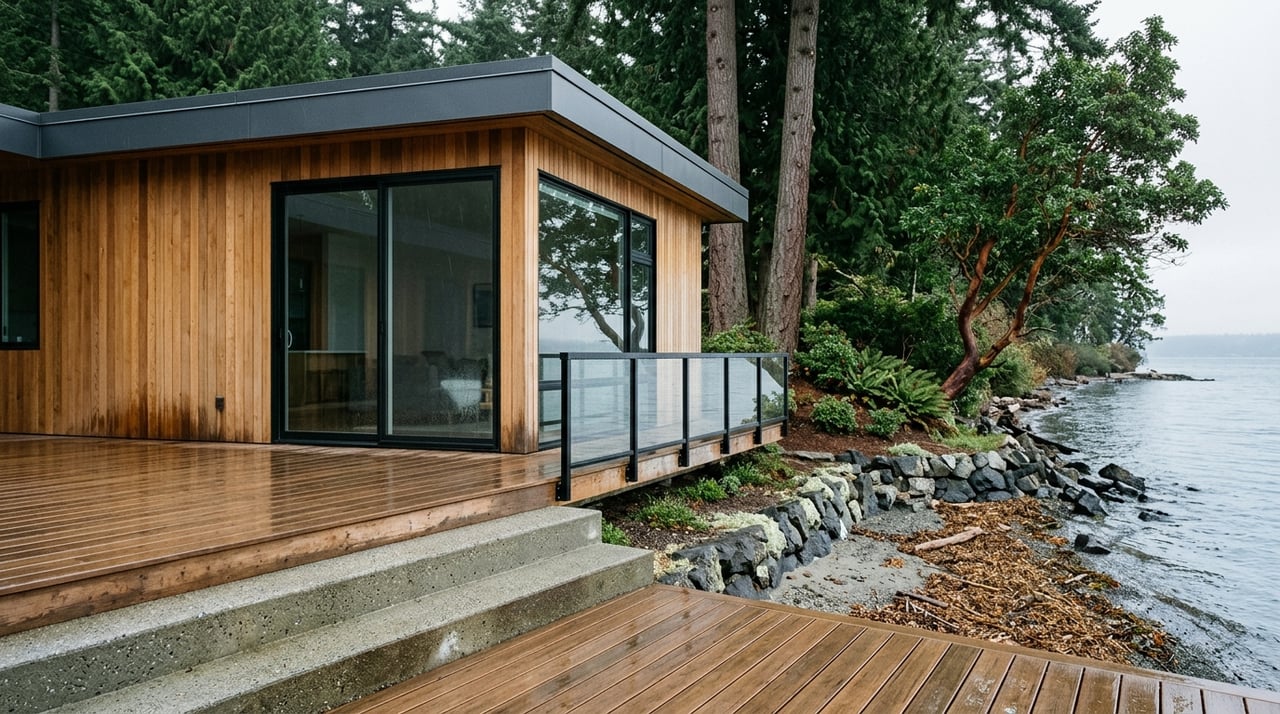
Hood Canal shoreline is not built like a uniform subdivision. County planning materials note that roads and private homes line much of the shoreline, while steep slopes along Hood Canal can limit landing boats and reduce flat usable areas.
That often leads to site-specific access solutions, stair systems, decks, or shoreline improvements that reflect the land rather than a standard layout. As you compare properties, pay close attention to slope, drainage, flat outdoor space, and the practicality of getting from the house to the water.
Beach access should be verified
Waterfront listings can use broad language, so access rights deserve a close review. Washington Ecology’s public-trust guidance explains that public use rights below the ordinary high water mark do not allow the public to cross privately owned uplands to get there.
For you, that means “beach access” should always be confirmed through the legal description, shoreline map, title review, and the actual physical route. If access is important to your lifestyle, verify exactly what you own, what you can use, and how you get there.
Septic should be a top due diligence item
On Hood Canal, septic is not a minor detail. Mason County requires permits for construction, alteration, extension, relocation, or repair of an on-site sewage system. The county also requires an inspection report by a certified operations-and-maintenance specialist within 12 months before sale, building permits, or other land-use actions when a property has an on-site sewage system.
That requirement alone tells you how important septic is in this area. The Hood Canal watershed has roughly 30,000 on-site sewage systems, and aging systems can leak pollutants toward the nearshore environment. Before closing, you want clear records, a recent inspection, and a realistic understanding of the system’s condition and any likely repair needs.
What to ask about septic
A few focused questions can help you avoid surprises:
- Is there a current inspection report from a certified specialist?
- Are there records for past repairs, upgrades, or pumping?
- Were any additions or changes to the home made that could affect system capacity?
- If repairs are needed, who will handle them and what approvals may be required?
If anything looks incomplete or unclear, dig deeper before contingencies expire. Septic issues can affect cost, timing, and even whether the property works for your intended use.
Well water needs its own review
If the property uses a private well, testing should be part of your offer strategy. Washington DOH says private well owners are responsible for testing their own water, recommends annual testing for coliform bacteria and nitrate, and recommends arsenic testing at least twice during ownership.
This is not something to leave until the last minute. If the seller cannot provide recent sampling results, you may want to plan for testing early so you can make a better-informed decision while you still have room to negotiate.
Future projects may need more permits than expected
Many waterfront buyers think about improvements right away. Maybe you want to add onto the home, rebuild stairs, repair a bulkhead, clear vegetation, add a dock feature, or improve drainage. On Hood Canal, those ideas can trigger shoreline review even when they seem minor at first glance.
Washington Ecology notes that shoreline permit exemptions are construed narrowly, and Mason County’s Shoreline Master Program governs local permit pathways. Depending on the project, a Shoreline Substantial Development Permit, Shoreline Conditional Use Permit, or Shoreline Variance may be needed.
Ask future-use questions early
Before you move forward, ask practical questions such as:
- What shoreline designation applies to this parcel?
- Were existing docks, bulkheads, stairs, or shoreline repairs properly permitted?
- Will a planned remodel or addition trigger shoreline review?
- Are there restrictions on grading, clearing, or vegetation removal?
Even if you do not plan immediate work, it is wise to understand the property’s limits before you buy. Future flexibility has real value.
Shoreline stability and drainage deserve attention
Hood Canal ownership also means paying attention to the land itself. Ecology says climate change is shifting shorelines inland and making flooding and wildfire more frequent and severe. The agency also encourages soft shoreline stabilization over hard armoring where site conditions allow.
This makes erosion history, bluff stability, drainage patterns, and past armoring decisions especially important. If a lot has steep slopes, visible erosion, or older shoreline work, those details deserve careful review with the right professional input.
Shellfish and recreation conditions can change
If part of your waterfront dream includes harvesting shellfish or frequent beach use, current conditions matter. Washington DOH continually classifies marine growing areas, and advisories can change over time. In June 2026, DOH warned that recreational shellfish harvest in Hood Canal was closed because of paralytic shellfish poison.
The lesson for buyers is simple: do not assume a listing description reflects current conditions. Near closing, it is smart to confirm the latest shellfish and recreation advisories if those activities are important to you.
Build the right local team
The best waterfront purchases usually involve more than a standard home inspection. Because Hood Canal properties combine home systems, shoreline rules, access questions, and land-use considerations, your due diligence team may need to be broader.
Depending on the property, useful specialists can include:
- Mason County Community Services for shoreline designation and permit questions
- Washington Ecology shoreline staff for broader shoreline planning guidance
- A certified OSS inspector or operations-and-maintenance specialist for septic review
- A certified lab or local health guidance for well-water testing
- A surveyor and title professional for boundary and access questions
- A coastal engineer, geotechnical professional, or shoreline design consultant for erosion, bluff stability, or armoring concerns
You may not need every expert on every deal. But knowing when to bring in the right specialist can protect both your investment and your peace of mind.
How to buy Hood Canal waterfront with confidence
Confidence comes from early verification, not assumptions. On Hood Canal, the strongest buyers look carefully at tide influence, shoreline designation, access rights, septic condition, well testing, permitting limits, and long-term site care before the transaction becomes final.
That careful approach does not take the joy out of waterfront buying. It actually does the opposite. When you understand what you are buying and how the property works, you can move forward with clearer expectations and a much stronger sense of security.
If you are exploring waterfront, view, or land opportunities around Hood Canal and the greater Puget Sound area, working with a broker who understands how scenic properties differ from standard resale homes can make the process feel much more manageable. For calm, informed guidance tailored to your goals, connect with AnnaLee Baglio.
FAQs
What makes Hood Canal waterfront property different from a typical home purchase?
- Hood Canal waterfront properties are affected by marine shoreline rules, tide changes, access questions, and site-specific issues like septic, wells, and shoreline permitting that usually do not apply the same way in a standard inland purchase.
Why do tides matter when buying waterfront property on Hood Canal?
- Tides can change beach exposure, shoreline appearance, and water access during the day, so a property may function differently depending on when you visit.
What should you verify about beach access on Hood Canal property?
- You should confirm access through the legal description, shoreline map, title review, and the actual route to the beach rather than relying only on listing language.
Why is septic inspection important for Hood Canal homes?
- Septic condition matters because Mason County requires a recent inspection report for properties with on-site sewage systems in certain sale and land-use situations, and failing systems can affect both property use and nearshore water quality.
What water testing should you consider for a private well in Mason County?
- Washington DOH recommends testing private wells annually for coliform bacteria and nitrate, and testing for arsenic at least twice during ownership.
Can you assume future waterfront improvements will be easy to permit?
- No. Docks, bulkheads, additions, grading, clearing, and shoreline repairs may require shoreline review or permits under Mason County and Washington shoreline rules.